
CA/Browser Forum Considers Making Cross-Sign EKU Requirements Explicit
Ballot SC103 — currently in discussion — would formally require Extended Key Usage fields on cross-certified subordinate CAs, closing the exact gap that caused Let's Encrypt's May outage.
HARICA Revokes Hundreds of Thousands of Certificates Over Compliance Gaps
Two separate CP/CPS violations — one involving the same clientAuth EKU issue rippling across the industry this year, another over a missing OCSP extension — forced back-to-back mass revocations.

HARICA Faces Scrutiny Over Certificates Issued to Sanctioned Russian Banks
A security researcher's Bugzilla report documented active certificates issued to EU-sanctioned entities including Sberbank and VTB — and HARICA initially declined to revoke them.

Chrome Begins Distrusting Public Certificates With the Client Authentication EKU
Chrome Root Program Policy v1.6 enforcement started June 15 — new public TLS certificates with both server and client authentication purposes are no longer trusted by default.
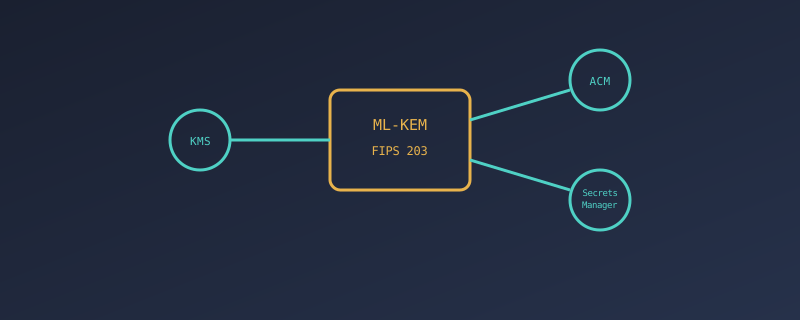
AWS Adds ML-KEM Post-Quantum Support to KMS, ACM, and Secrets Manager
Three of AWS's most security-critical services now support hybrid post-quantum key agreement using ML-KEM, the NIST-standardized successor to the CRYSTALS-Kyber algorithm most cloud providers had been using experimentally.

Let's Encrypt Commits to Merkle Tree Certificates for Post-Quantum Authentication
The world's largest certificate authority is targeting a late-2026 staging rollout for MTCs — the same post-quantum architecture Google and Cloudflare proposed earlier this year.
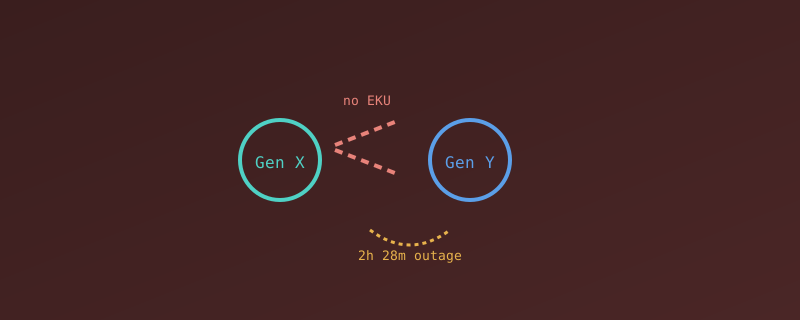
Let's Encrypt Briefly Halted Issuance Over a Missing EKU on Its New Root
A 2-hour-28-minute outage on May 8 traced back to cross-signed certificates bridging Let's Encrypt's old and new root hierarchies — missing an Extended Key Usage field that had just become mandatory.

Let's Encrypt Launches Generation Y Root Hierarchy
New roots, general availability for short-lived certificates, and the default classic ACME profile switching over — all landing in the same week.
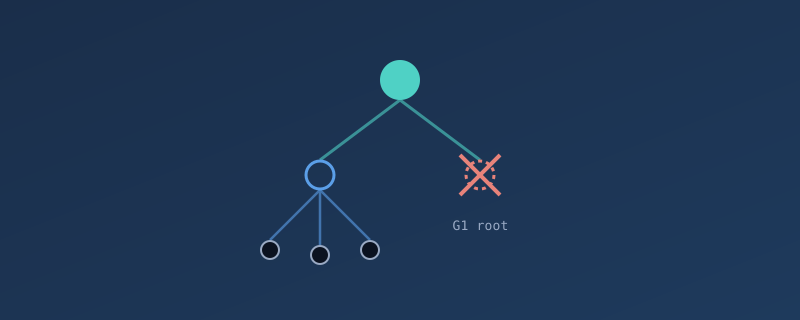
DigiCert's G1 Roots Lose Browser Trust — Affecting RapidSSL, GeoTrust, and Thawte Too
Chrome and Firefox stopped trusting DigiCert's older G1 root certificates on April 15 — a change that reaches every brand under the DigiCert umbrella, not just certificates sold directly under the DigiCert name.

Sectigo Launches Private PQC for Testing Post-Quantum Certificates
A new feature in Sectigo Certificate Manager lets enterprises issue and manage post-quantum certificates inside their existing workflows — without new infrastructure or tools.

Industry Analysts Warn October 2026 Could Bring a Wave of Certificate Outages
TechRadar Pro's analysis connects a specific date to the first 200-day certificates issued under this year's new validity rules: many of them expire in early October, all around the same time.
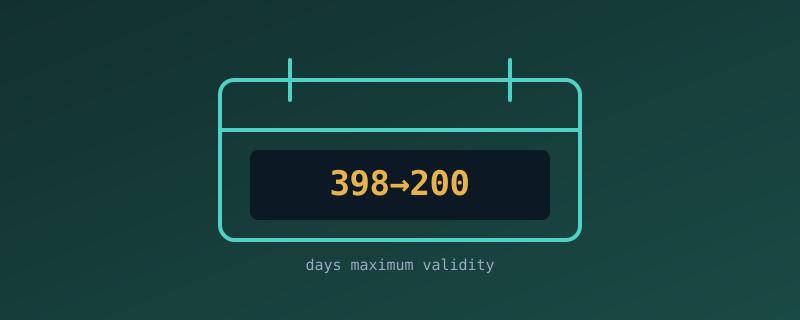
The 200-Day Certificate Cap Is Now in Effect
March 15 marked the first enforcement milestone of the CA/Browser Forum's phased plan to shrink maximum TLS certificate validity from 398 days down to 47 by 2029.
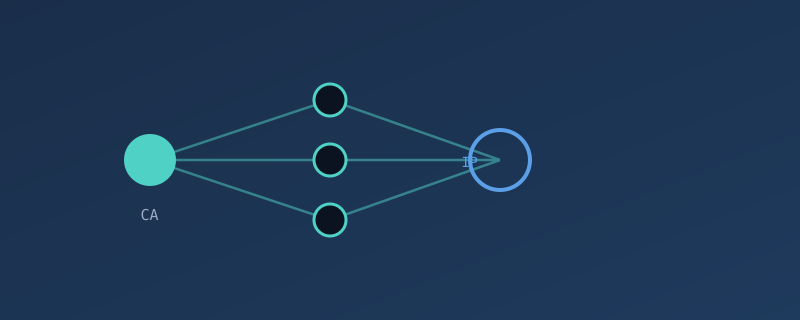
Certbot Adds Support for IP Address Certificates
Certbot 5.3 and 5.4 add flags for requesting certificates that secure a bare IP address rather than a domain name — a capability Let's Encrypt enabled for general use earlier this year.
Let's Encrypt Stops Including Client Authentication in Default Certificates
As of February 11, Let's Encrypt's default certificate profile no longer includes the TLS Client Authentication EKU — a change driven by Chrome's root program policy, not a Let's Encrypt-specific decision.